Hedge Trimming in Covent Garden

Hedge Trimming Covent Garden provides a focused hedge cutting service for gardens, boundary planting and managed outdoor spaces in and around Covent Garden. The work is centred on maintaining shape, controlling growth and keeping hedges tidy without stripping them back too hard. That includes seasonal trims, routine reductions where appropriate, and careful finishing so the result looks deliberate rather than rushed. If you need a neat line, a softer natural profile or a fuller screen kept under control, our service is built around the plant and the condition it is already in.
We handle hedge trimming as a practical maintenance task rather than a one-size-fits-all cut. Different species need different treatment, and the right approach depends on whether the hedge is formal, mixed, recently planted or established for privacy. Good trimming protects density while improving appearance, and it can also help prevent a hedge becoming too wide, too tall or uneven. Where useful, we can combine hedge work with related garden maintenance so the boundary sits neatly alongside the rest of the outdoor space.
If you are comparing options or planning a larger tidy-up, use the site to request a quotation or to explore the wider range of garden services. A clear description of the hedge type, the approximate length and the current height helps shape a sensible reply. For customers who want to understand the full scope first, the services overview and pricing pages are a good place to start before making contact.
Regular hedge care and seasonal cutting
Routine hedge trimming keeps growth manageable and helps avoid the need for harsh corrective work later on. A hedge that is cut regularly can usually be maintained with lighter passes, which is often better for appearance and for the plant’s structure. Trimming is not only about shortening new growth; it is also about keeping the line straight, preserving the intended thickness and making sure the hedge still serves its purpose as a screen, border or feature.
Different times of year bring different priorities. In active growing periods, trimming is often about controlling expansion and keeping the hedge within its intended footprint. In quieter periods, the emphasis may be on tidying the outline, removing straggly extensions and preventing the hedge from encroaching on paths, drives or neighboring planting. Where hedges contain mixed species, the cut may need to be adjusted to avoid favouring one plant over another. Seasonal judgement matters as much as the cut itself.
Our approach is to keep the work tidy, even and proportionate to the hedge in front of us. We avoid unnecessary disturbance and focus on a finish that supports the hedge’s ongoing health and appearance. Garden maintenance can be useful for customers who want hedge trimming planned alongside other routine outdoor upkeep, especially where borders, lawns and pathways all need attention at the same visit.
Formal shapes, privacy screens and boundary hedges

Some hedges are meant to be crisp and architectural, while others are there to soften a boundary or reduce overlooking. Formal hedges usually need straight, even faces and level tops, with attention to symmetry from one end to the other. Privacy hedges may be less rigid in appearance, but they still benefit from sensible shaping so they grow dense enough to do their job without becoming top-heavy or patchy. We trim according to the role the hedge plays, not just its species.
Boundary hedges can be awkward where space is limited, especially if they sit close to paving, railings or a neighbour’s side. In those situations, clean access and careful reduction are important. The aim is to keep the hedge presentable while respecting nearby features and the available room. Where a hedge has grown beyond its intended line, a staged reduction may be more suitable than a single severe cut, depending on the plant and the degree of growth. That approach can preserve shape while improving manageability.
If hedge work forms part of a broader garden project, landscape gardening may be relevant for customers wanting planting, structure and layout considered together. For more substantial transformations, landscaping can provide a wider framework where hedge lines, beds and circulation routes are planned as one coherent scheme rather than treated separately.
What affects hedge trimming work
Hedge trimming is shaped by a number of practical factors, and those factors influence the time, access and method needed. Height and length are the obvious ones, but density, the hedge’s age and whether it has been recently cut also matter. A dense hedge may need slower progress to achieve a balanced finish, while a sparse hedge needs a lighter touch so the work does not expose bare sections. The condition of the hedge matters as much as its size.
Access is another useful consideration. A hedge beside a narrow path, a shared boundary or a confined rear space may require more measured movement and tidier waste handling than a hedge with open approach. The presence of obstacles such as trellises, fences, sheds, lighting or established planting can also affect the way the cut is carried out. We take these practical details into account when discussing the task, which helps produce a quotation that matches the work more closely.
For planning purposes, it is helpful to have a broad idea of the hedge type and the level of reduction needed before requesting a price. If you are gathering information first, pricing and quotes is a sensible page to review. It can help you prepare the details that matter most, and it gives a clearer picture of how enquiries are handled before any work is booked in.
Hedge trimming alongside wider garden upkeep
Many customers prefer hedge trimming to sit alongside other garden work, especially when the outdoor space needs an overall tidy rather than one isolated task. A hedge can make a stronger visual difference when the surrounding beds, edges and lawn are also being maintained. That is why hedge trimming often pairs well with scheduled visits that include general tidying, surface clearance and selective pruning elsewhere in the garden. The result is usually more coherent than tackling each feature in isolation.
If the hedge has dropped a significant amount of clippings, a clean finish depends on the work being gathered and cleared properly. A tidy site matters as much as the trim itself, particularly where pathways, doorways or shared access points need to remain usable. We aim to leave the space orderly and the hedge visually settled, with the cut supported by sensible clearance rather than simply leaving debris behind. Garden clearance is relevant where the hedge job is part of a larger tidy-up and the surrounding area also needs clearing.
Three simple details usually help make a quotation more useful: the hedge location, its approximate size and whether you want a light tidy or a more noticeable reduction. If the hedge is part of a larger outdoor maintenance plan, the broader picture can be just as important as the hedge alone. For customers who prefer to see the full list of services before deciding, services overview offers a practical starting point.
Working carefully around established planting
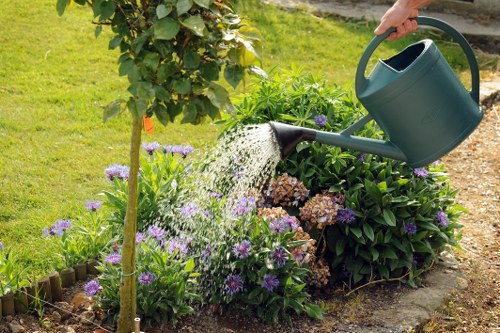
Hedge trimming often takes place beside other planting, and that calls for a careful approach. When shrubs, climbers, borders or young trees are close to the hedge line, the work needs to be controlled so those nearby plants are not damaged or crowded out. Cutting back a hedge is not just about the visible faces; it is also about keeping the edge clean where growth meets other parts of the garden. That attention helps the whole space look intentional rather than overrun.
In mixed gardens, a hedge may form part of the structure that ties the planting together. A neat trim can improve light levels, define the border and prevent the hedge from dominating lower plants. At the same time, it is important not to remove so much growth that the hedge stops performing its screening role or develops thin patches. The right finish depends on balancing form, function and the hedge’s current condition. Where additional planting work is needed, it may be better handled as part of a wider scheme rather than forced into the hedge job itself.
Customers who want planting and soft landscaping considered together may find garden maintenance useful if the aim is to keep an established garden in good order over time. For larger projects that involve reworking the structure of the outdoor space, landscaping may be the better fit because it brings hedges, borders and layout into the same planning process.
Preparing for a quotation
When requesting a quotation, clear information makes it easier to understand the scope of the hedge work. The most useful details are usually the hedge’s approximate dimensions, its location in the garden and whether you need routine trimming, a more substantial reduction or a tidy after a period of growth. If the hedge sits near fencing, paving, access gates or neighbouring property, mentioning that at the outset can help avoid later adjustments. The aim is to describe the job plainly, not to over-explain it.
If photographs are available, they can help illustrate the hedge’s current condition, but a written description still matters because it explains what outcome you want. A hedge that simply needs tidying is not the same as one that has become too broad or too tall, and those distinctions influence how the work is approached. Where the hedge is especially long or difficult to reach, stating that upfront is useful. It helps shape a more accurate discussion of the task and the practical steps involved.
For customers ready to move forward, contact us is the direct route to request a quotation. If you would like to check practical standards around how work is handled, insurance and safety is also available for review before sending details through.
Access, waste and site finish
Good hedge trimming is not only about the visible cut. The working area matters as well, especially where access is tight or where clippings need to be moved through enclosed spaces. A thoughtful finish keeps paths usable, respects surrounding features and avoids leaving the garden looking half-finished. For many customers, the clean-up is an important part of the service because it turns a cut hedge into a tidy, usable boundary again. The hedge should look improved without the site becoming awkward to use.
Where a hedge produces a meaningful volume of cuttings, waste handling should be planned alongside the trimming itself. That may include collecting material efficiently, keeping shared areas clear and avoiding unnecessary disruption to other parts of the garden. We approach the task with an eye on order as well as appearance, so the hedge, paths and neighbouring planting all remain manageable once the work is complete. If you are interested in how waste and plant material are dealt with more broadly, recycling and sustainability gives a relevant overview.
For jobs that may sit alongside other outdoor improvements, it can also be helpful to review decking services if the hedge border meets a seating area or timber feature that needs coordinated attention. The useful point is not to turn every enquiry into a large project, but to make sure the surrounding features are considered where they affect the final result.
About Covent Garden

Covent Garden is one of central London’s most recognisable districts, shaped by a long history of market activity, theatre, shopping and public life. Its name is linked to the former convent garden of Westminster Abbey, and the area later became known for the fruit and vegetable market that occupied the central square for centuries before relocating in the 1970s. Today, the Piazza, the market hall and the surrounding streets create a distinctive urban landscape where eighteenth- and nineteenth-century fabric sits alongside later commercial and cultural development. The area is compact but layered, with pedestrian routes, arcades and side streets giving it a close, walkable character that contrasts with the broader sweep of nearby central London.
Routine care for established and new hedges
Established hedges and younger hedges need different handling. A mature hedge may have a defined shape already, and the work is then about preserving that shape while keeping growth under control. A newer hedge often needs gentler, more formative trimming so it develops density from low down and grows into a useful screen rather than a thin line of stems. The pace and style of trimming should reflect the hedge’s stage of growth, because the same cut can have very different consequences on different plants.
There are also practical limits to what trimming can achieve in one visit. If a hedge has not been maintained for some time, it may need a gradual return to shape rather than an aggressive reduction. Likewise, some species respond better to regular light maintenance than to infrequent heavy work. That is why it helps to discuss the hedge’s condition honestly. A sensible plan can then be put together around the real state of the planting rather than an assumed ideal. Measured trimming is often the better long-term option.
If you want to talk through the hedge before arranging work, the best next step is simple: send the details, ask for a quotation and note anything that could affect access or finish. For customers comparing broader garden work at the same time, lawn mowing can be a practical companion service where the aim is to bring the whole garden into tidy order.
Hedge trimming as part of a planned outdoor schedule

Regular garden care works best when hedge trimming is not left until the hedge has become difficult to manage. A planned schedule makes the work more predictable and usually keeps the hedge in better condition over time. That applies whether the hedge forms the main boundary, divides sections of the garden or acts as a backdrop to planting and paving. Trimming at suitable intervals helps the shape stay clean and the hedge stay useful without constant corrective work. It is a straightforward service, but timing and consistency make a noticeable difference.
For customers with more complex gardens, hedge trimming can sit neatly alongside tree work, planting adjustments or other external maintenance. A coordinated approach helps avoid one feature spoiling the appearance of another, especially where a hedge rises above beds or sits close to mature shrubs. If the garden also needs larger-scale structural changes, tree lopping and removal may be relevant where trees affect light, access or the overall balance of the space. Each element is easier to judge when considered in context.
To request a quotation, use the contact route when you are ready and include enough information for the hedge to be understood clearly. If you would like to see who we are and how the business is presented more generally, about us is available, and request a quotation is the final step when you are ready to proceed.